The Room Is the Reference Shelf: Getting Real Data From a Keyboard Meetup
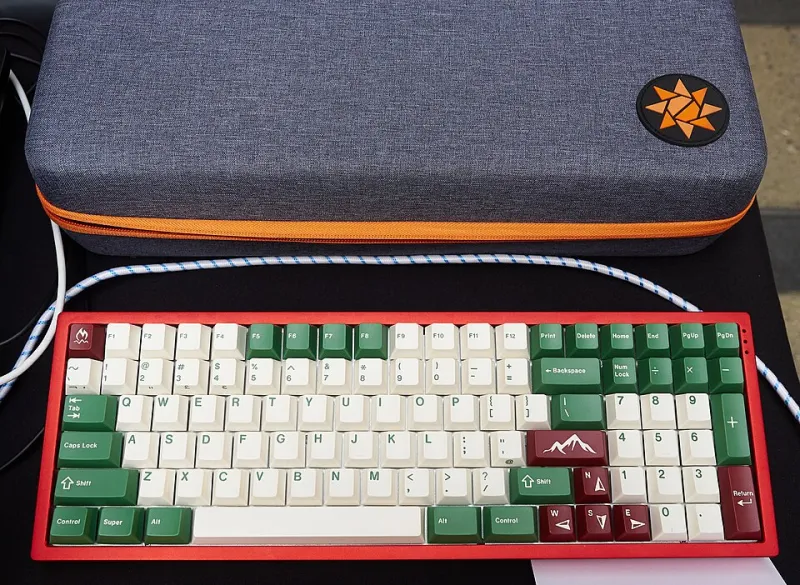
Photo: Patrick Breen, CC BY 2.0, via Wikimedia Commons
Keyboard meetups have a reputation problem. From the outside, they can look like a combination of show-and-tell and group buy support group: rows of custom boards, expensive keycaps, and conversations that assume you already know what a lubed linear feels like. That reputation keeps plenty of curious people home. Which is a shame, because a good meetup is one of the few places where you can compare a dozen switches, mounting styles, and keycap profiles in person instead of trusting a review video and a stranger’s sound test.
The trick is to treat the room like a reference library, not a leaderboard. You are not there to prove your taste. You are there to gather data for your own fingers. That shift in mindset makes the whole event more useful, less intimidating, and a lot more fun.
Before You Go: Pick a Question, Not an Outfit
You do not need a custom build to attend. Plenty of people show up with a stock hot-swap board, a laptop, or nothing at all. What helps is arriving with one or two honest questions. Maybe you want to know whether tactile switches actually feel less mushy than you remember. Maybe you are curious about 65% layouts but worried about losing the function row. Maybe you want to hear what a gasket mount does to sound without buying a whole new keyboard.
Write those questions down on your phone. Meetups are stimulating in the same way a crowded Best Buy can be: lots of input, short attention span, and a tendency to forget what you actually cared about. A short list keeps you from spending the whole afternoon chasing whatever board has the loudest crowd around it.
What to Bring, and What to Leave at Home
Bring a small bag with a few practical items: a phone or notebook for notes, a microfiber cloth, hand sanitizer, and maybe a small flashlight if the venue is dim. If you want to bring your own board, that is fine, but keep it simple. A daily driver with a switch or keycap set you can explain is more useful than a fragile showpiece you are afraid to set down.
Leave the soldering iron, the full tool roll, and the bin of loose switches at home unless the organizers specifically ask for them. This is not a build station. Also leave behind the urge to bring your most expensive or rare board just to make an impression. The people who get the most out of meetups are usually the ones who are easy to talk to, not the ones with the most exotic case finish.
If you are testing other people’s boards, bring clean hands and a willingness to ask before you touch. Most attendees are happy to let you try a board, but nobody likes watching someone grab a build like it is a demo unit at a big-box store.
Test With a Purpose
Here is the most useful habit at any meetup: type the same short paragraph on every board you try. Pick something ordinary, like a sentence about your job or a line from a favorite book. The point is consistency. If you type something different every time, you will remember the vibe but not the comparison.
Pay attention to a few specific things. How does the board feel under your fingers when you are typing at a normal pace? Does the sound bother you after thirty seconds, or is it just impressive for five? Does the layout make you reach for keys that are not there? Is the board comfortable at the angle it is sitting, or are you already adjusting your wrists?
Do not trust first impressions alone. A stiff switch can feel exciting in a noisy room and exhausting after ten minutes. A deep, thocky board can sound amazing until you realize you would not want to type on it during a work call. Try to type for at least a minute, and try the same board twice if you can. The second pass is where your hands usually tell the truth.
Ignore the Hype Current
Every meetup has a gravity well. It might be a hyped group-buy board, a trendy switch, or a keycap set that everyone wants to see. There is nothing wrong with checking those out, but do not let the crowd decide your preferences for you. The board with the longest line is not automatically the board that suits your hands.
A useful rule: for every hyped board you try, try two quiet ones that nobody is waiting for. Those are often where you learn the most. You might discover that you prefer a simple tray-mount board with good stabilizers over a fancy gasket build. You might realize that you do not actually like the sound profile you have been chasing online. That is not a failure. That is the entire point.
The Etiquette That Makes Meetups Worth Returning To
Ask before you touch. Keep drinks away from the tables. Do not take a board apart unless the owner offers. If you are testing a board with someone else’s keycaps, be gentle with pullers and do not rearrange their layout without asking. These are small things, but they are what make a room full of expensive gear feel welcoming instead of tense.
Also, be generous with what you know, but do not turn every conversation into a lecture. The best meetup conversations are short, specific, and two-way. If someone asks about your board, tell them what you like about it and what you would change. If you do not know something, say so. The hobby has plenty of confident people with strong opinions. It can always use more people who are honest about their experience.
Leave With Notes, Not a Shopping Cart
Before you head home, take five minutes to write down your impressions. Not a full review, just the highlights: which board felt best, which switch surprised you, which layout annoyed you, and which person gave you a useful tip. Grab a contact or a handle if you clicked with someone. The community is the real long-term value here, not the one board that sounded incredible in a loud room.
Then wait a day before buying anything. Meetup excitement is real, and it has a way of making a $300 purchase feel like a logical next step. Give your hands and your wallet a little time to catch up. If you still want the thing tomorrow, that is a much better signal than wanting it while someone is handing you a demo board.
A keyboard meetup will not hand you a perfect setup. It will hand you something more useful: a pile of real-world reference points. Show up curious, type slowly, ask good questions, and leave with a sharper sense of what you actually like. That is a far better souvenir than a photo of somebody else’s grail board.